
04 Feb Improving health outcomes for women and babies at higher risk of complications during pregnancy and birth
Home › News & insights › Latest news
4 February 2026
Improving health outcomes for women and babies at higher risk of complications during pregnancy and birth
Researchers in NIHR ARC South London’s maternity and perinatal mental health theme have been leading research to ensure high-quality care for all women before, during and after pregnancy.
 POPPIE trial participant Jessica George with her baby. Photo: NIHR ARC South London.
What is the health problem?
Maternity care for mothers and babies in the UK is of high quality overall, but could and should be more consistent and provide greater equity of outcomes. Around 8% of babies in the UK are born prematurely — about 60,000 babies each year. This is higher than many countries in Europe. Babies born prematurely may need special care, are more likely to have developmental problems early in their life, and to develop health problems as adults.
There are also major disparities in maternal health outcomes for women belonging to ethnic minorities and those living in disadvantaged areas. For example, Black women in the UK have higher maternal death rates than white women, and a higher risk of miscarriage, giving birth prematurely and stillbirth.
Establishing the evidence on the benefits of alternative models of maternity care
Researchers in the ARC’s maternity and perinatal mental health theme have been leading research to explore how health outcomes for women and babies at risk of complications can be improved.
In 2016, Professor Jane Sandall — the ARC’s maternity and perinatal mental health theme lead, and professor of women’s health & social sciences at King’s College London — led an influential international review into the evidence on models of midwifery continuity of care. These models involve the same midwife or small team of midwives providing care for a woman during her pregnancy, birth, and after birth.
The review (Cochrane, April 2016) showed that women who had midwifery continuity of care were:
less likely to lose their baby before 24 weeks
less likely to have a premature baby
less likely to lose their baby overall (fetal loss and neonatal death)
This work has had significant impact on health policy. At the international level, it informed the WHO’s guidance on pregnancy and childbirth care. At the national level, it informed NHS England’s plans announced in March 2018 to introduce continuity of midwife care for most women in England by 2021.
What has been the impact?
- The ARC’s maternity research has been cited widely in policy, including in the Department for Health and Social Care’s strategy Safer Maternity Care (December 2017), NICE intrapartum care guidance (2017), and the WHO’s antenatal guidance (2016).
- The ARC’s systematic review of the midwife continuity of care model (updated 2024) was cited in the NHS Long Term Plan and informed NHS England’s Saving Babies Lives Care Bundle version 2.
- The ARC’s research on specialist midwife continuity models has been cited in the NHS Equity and Equality guidance for local maternity systems, the NHS Implementing Better Births strategy, Royal College of Midwives position statements, and the NHS Race and Health Observatory’s review of ethnic inequalities in healthcare.
- WHO guidance: Transitioning to midwifery models of care: global position paper (2024) and Implementation guidance on transitioning to midwifery models of care (2025).
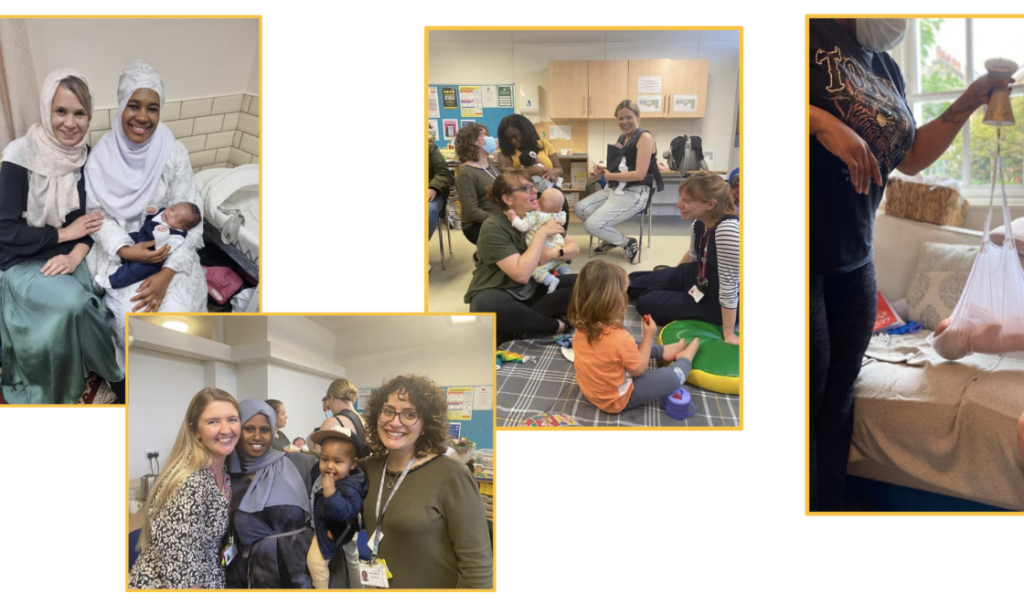 A community-based midwifery continuity of care model (the LEAP model), based in Lambeth, south London.
First trial of continuity of midwife care for women at risk of preterm birth
The ARC researchers, led by Professor Jane Sandall and research fellow Dr Cristina Fernandez Turienzo, conducted the first trial in the world of a continuity of midwife care model specifically designed for women at higher risk of preterm birth. This was a feasibility study to show whether the model of care could be delivered.
Working with the Department of Public Health at Lewisham Council and Lewisham Clinical Commissioning Group, the ARC team set up a new service with Lewisham Hospital in south London designed to better support women who have a higher risk of preterm birth.
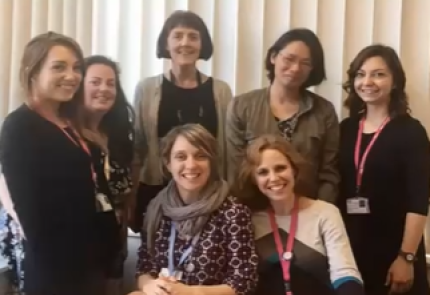 The POPPIE midwife team at Lewisham Hospital, south London.
The service, known as POPPIE, launched in May 2017, and involved a team of midwives offering continuity of care linked to a specialist preterm surveillance clinic at the hospital.
Between May 2017 and October 2018, 334 women were recruited to the trial — 169 women under the care of the POPPIE team and 165 receiving standard care. The results of the trial showed it was feasible and practical to deliver this new model of care with no difference in adverse outcomes for women or their babies.
The trial showed that babies born to women being cared for by the POPPIE team were more likely to have skin-to-skin contact after birth, and to breastfeed immediately after birth. The POPPIE model was also experienced positively by both participants and midwives.
“It was a very scary experience. But when I got to the hospital it was a friendly face who I’d seen many times who met me and that puts your mind at ease. If everyone had the POPPIE experience, even with another lockdown, the care of a woman would be so much better managed because it’s the same person who would know everything about that woman… You really build up that relationship; your husband, your partner, even my mum, knew my midwife, and that’s such an underrated blessing.”
Jessica George — Participant in the POPPIE trial
“The team was very motivated, had an amazing skill mix and showed incredible support to one another. We had low staff turnover, low staff sickness and enjoyed a great work-life balance.”
Manuela Pagliaro — POPPIE midwife and team leader
In addition, Lia Brigante, consultant midwife researcher, and the research team explored women’s experience of their maternity care and found that women who received care from the POPPIE team reported greater trust in their midwives, increased perceptions of safety and quality of care.
The researchers also conducted a realist review of previous research to understand some of the reasons why midwifery continuity of care reduces preterm birth. The review identified several interrelated factors:
- Midwifery continuity of care resulted in a sense of true partnership between midwives and women, which affected how maternity care was accessed and experienced — for example, improving personalised support for women to inform their pregnancy and childbirth choices.
- Midwifery continuity of care led to fewer women ‘falling through the gaps’ in the maternity system and more consistent care.
The review highlighted that it was vital that health services provided sufficient resources, staffing, addressed institutional racism, and engaged with and supported staff effectively to deliver continuity of midwife care.
“It’s possible that increased trust and engagement, improved care coordination and earlier referral, may improve outcomes in populations suffering more social determinants of preterm birth, such as women with social complexity, who find services hard to access. However, we need larger, more statistically robust trials to evaluate the impact of continuity models on disadvantaged communities.”
Dr Cristina Fernandez Turienzo — King’s College London

Comparing specialist midwife continuity models of maternity care for women with social risk factors
Recent national reports have highlighted how women with social risk factors — such as being a young mother, living in poverty, being a migrant or refugee, experiencing mental illness, substance abuse, or belonging to a minority ethnic group — are over 50% more likely to end in stillbirth or neonatal death and carry an increased risk of premature birth and maternal death.
The ARC’s researchers initiated new research to examine and compare different models of maternity care that could improve clinical outcomes and experiences for Black and minority ethnic women and those living with social risk factors. This research has been led by Dr Hannah Rayment-Jones, an experienced midwife and research fellow at King’s College London.
“We wanted to understand the underlying causes of these maternal health inequalities, and what models of care may improve women’s outcomes and how. We identified a range of mechanisms driving the inequalities often seen in maternal and infant health outcomes, such as discrimination, paternalistic maternity care, and women’s perceptions of surveillance that affects how comfortable they feel engaging with healthcare professionals and seeking help.”
Dr Hannah Rayment-Jones — King’s College London

Dr Rayment-Jones’ research (Project20) evaluated two specialist models of continuity of midwife care for women with social risk factors. One model was based in a community health centre in a deprived area; the other was based in a large inner-city hospital. Both provided continuity of midwife care before, during and after pregnancy.
Women who experienced both specialist models described feeling more able to discuss their needs, and feeling more confident in, and likely to follow, advice from a midwife they know and trust. Continuity of midwife care reduced women’s anxiety throughout pregnancy, and made it easier for women to seek timely help.
“…they are invested in you and in kind of how things go and the outcome and not just the numbers side of things, like, ‘Oh baby’s heart is beating,’ but also like, ‘How are you?’… ‘How are you coping with all of it?’ And I think when you feel valued that perhaps you take more in.”
Service user — experiencing a specialist continuity model of care
“…the fact that I see someone regularly. I feel like I’m being looked after as well… I can rely on them to look after me, remind me of appointments and stuff like that as I really struggle … [the midwives] text, call, put it in my notes and what-not so …I am remembering.”
Service user — experiencing a specialist continuity model of care
“We’ve definitely had a few women that we’ve thought are not really a concern… And then actually it’s not until 25, 28 sometimes later weeks that they say, ‘Actually I’m in this really abusive relationship,’ or, ‘Actually I am technically homeless.’ I think it’s the building of trust… I think by then they feel maybe comfortable enough to disclose.”
Midwife — delivering specialist continuity model of care
Findings from a community-based continuity of care model in Lambeth
As well as exploring the benefits of alternative models of care, the ARC team carried out a retrospective study to analyse the clinical outcomes for women with social risk factors living in a deprived area of Lambeth who received a community-based midwifery continuity of care model (the LEAP model).
The LEAP midwife team. Photo: NIHR ARC South London.For this study, the ARC’s maternity researchers worked with Guy’s and St Thomas’ NHS Foundation Trust, and the Lambeth Early Action Partnership.
The research showed that the LEAP model of care significantly reduced preterm birth and birth by caesarean when compared with those receiving usual maternity care in Lambeth:
preterm birth rate (LEAP) vs 11.2% in traditional care
caesarean birth rate (LEAP) vs 38.0% in traditional care
emergency caesarean rate (LEAP) vs 22.5% in traditional care
“This real-world study shows that a model of caseload midwifery care implemented in an inner-city area of deprivation and ethnic diversity improves outcomes by significantly reducing preterm birth when compared with traditional care. Our current research is following women and their babies for the first year of life to explore the longer term impact of this very targeted model of care. These findings are informing the rollout and implementation of targeted midwife continuity of care in the NHS Long Term Plan and Equity Strategy and the Core20PLUS5 approach to reduce inequalities.”
Professor Jane Sandall CBE — King’s College London

“During my pregnancy the thing that was wonderful was care from the same small group of midwives, so I felt very much seen and heard.”
Shakti Pandey — service user experiencing LEAP model
Watch: The LEAP model in action
Original source: arc-sl.nihr.ac.uk — NIHR ARC South London legacy content archived May 2026.