Exploring parental emotional support needs after NICU discharge
Home › Research and implementation › Our research areas › Maternity and perinatal mental health
28 June 2023 — adopted May 2023 • completed September 2024
Exploring parental emotional support needs after NICU discharge
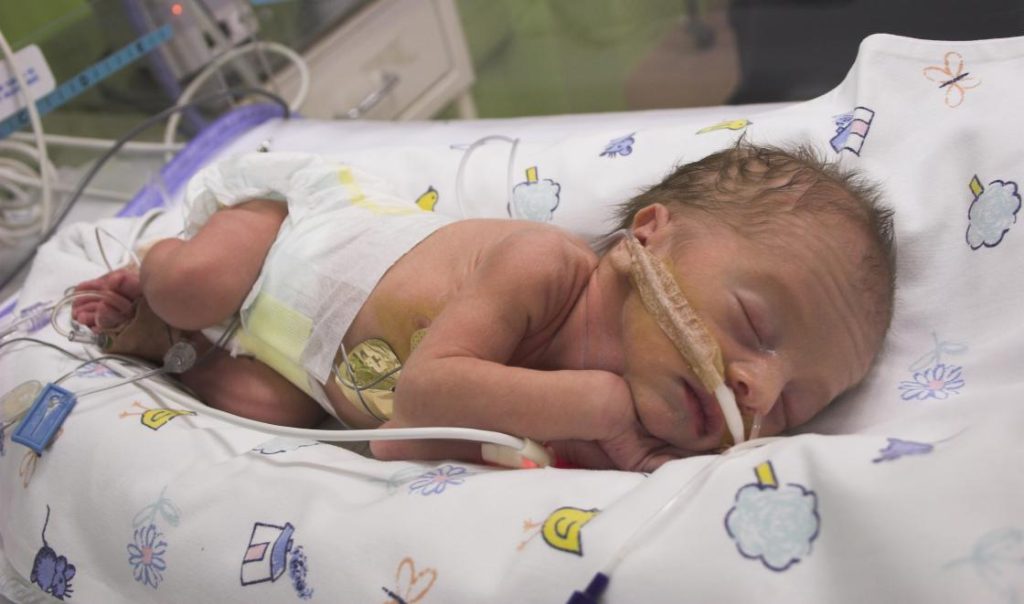
In the UK, one in seven babies will require an admission to a neonatal unit (NICU) shortly after birth. This is optimal for the infant’s survival, however, it can be an extremely difficult and overwhelming experience for parents.
1 in 7
babies in the UK require a NICU admission shortly after birth (Neonatal Data Analysis Unit, 2016)
The postpartum period is a time of increased psychological vulnerability for all parents. However, systematic review evidence suggests that parents with a baby admitted to neonatal care are at considerably higher risk of developing symptoms of anxiety, depression or posttraumatic stress than parents of healthy, full-term infants (Malouf et al., 2022; Vigod et al., 2010).
What is the health problem?
During the infant’s time in hospital, parents are surrounded by medical professionals and monitoring equipment constantly reassuring them about their baby’s wellbeing. The transition from hospital to home is the first time parents will have cared for their baby independently, leaving many in a state of constant fear that they may not recognise signs of illness or know how to respond in an emergency.
The lack of continuity between hospital and community-based services means community staff do not understand the infant’s unique needs and lack specialist knowledge of how to care for infants with complex medical conditions (Adama et al., 2021).
Despite these known challenges, the point of discharge is often thought of as the end of the neonatal journey, and little research has been carried out on the long-term implications of a neonatal stay on parental mental health.
Why this research is important
Research suggests high levels of parental psychological distress may persist for many months if not years after discharge (Malouf et al., 2022). Further research is therefore necessary to understand how psychological distress manifests after discharge and what factors are associated with parental wellbeing, distress and resilience.
It is also important to develop a better understanding of how existing services are meeting the needs of this population and what improvements can be made to both hospital and community-based services to better support parents throughout their neonatal journey.
What are the aims of the project?
Primary objective:
To quantitatively evaluate change in perinatal mental health outcomes among parents with babies in NICU across three time-points: 2–4 weeks, 4–6 months, and 10–12 months post-discharge
Secondary objectives:
Quantitatively investigate the association between parent and infant characteristics and parental clinical outcomes, to determine risk and protective factors
Evaluate the association between parental psychological distress and disturbances in parent–infant bonding
Summarise physical and mental health service use at all three time-points
Qualitatively explore parents’ subjective experience of distress, service use and support needs in the year following NICU discharge
How the research will be carried out
2–4 weeks post-discharge
4–6 months post-discharge
10–12 months post-discharge
This observational prospective longitudinal cohort study will follow participants across the three time-points above. Participants will be recruited via a study poster displayed across three NHS NICUs and through third sector organisations’ social media platforms.
Semi-structured interviews will be conducted with an estimated 20 parents (approximately 10 mothers and 10 fathers), purposively selected on the basis of parent and infant characteristics. Interviews will explore:
✓
The psychological impact of having a baby admitted to NICU, including perceived challenges and coping mechanisms
✓
Service use — what parents found helpful or unhelpful and what factors influence their decision to access support
✓
Support needs — how existing services could be improved and what additional services would be beneficial
How patients and the public are involved
PPIE has been implemented throughout various stages of the project’s development, working with the Evelina London Children’s Hospital ENSPIRE programme — a group of veteran NICU parents who advise and work collaboratively with the neonatal team.
Design
The ENSPIRE experts by experience group reviewed draft recruitment materials and time-point 1 questionnaires, providing feedback on suitability, sensitivity, ease of answering and appropriate length. They also advised on ensuring the research targets a diverse sample and addresses inequalities in research.
Analysis
A summary of initial findings will be presented to the ENSPIRE programme to elicit feedback and determine how to prioritise themes identified, ensuring they truly represent a service user perspective.
Dissemination
Service user-led charities will disseminate findings by sharing a report on their social media platforms and web pages.
Potential benefits of the study
✓
Understanding risk and resilience factors will enable identification of families at greatest need of support during the early stages of a neonatal admission
✓
Better knowledge of parental need will enable development of a more tailored programme of support, giving families the emotional support and skills teaching they need to confidently care for their infant after discharge
✓
Improving parental mental health in the postpartum period may reduce acute care visits after discharge — high levels of parental anxiety around the time of discharge have been associated with an increased number of acute care visits (Gennaro & Stringer, 1991)
Meet the team
 Katherine Sabin PhD student and project lead, King’s College London |
Dr Claire Wilson 
NIHR academic clinical lecturer and psychiatry specialist registrar, King’s College London |
Related content
- →
Research investigates how to treat severe infections in newborn babies (NeoSep-ADAPT) - →
Pregnancy planning for parents with mental illness - →
Maternity and perinatal mental health research at ARC South London
Original source: arc-sl.nihr.ac.uk — NIHR ARC South London legacy content archived May 2026.