
11 Feb Celebrating six years of NIHR ARC South London
Home › News & insights › Latest news
11 February 2026
Celebrating six years of NIHR ARC South London
Since October 2019, NIHR ARC South London has brought together researchers, health and social care practitioners, and local people to improve health and social care across south London and beyond.

As our programme concludes in March 2026, we are sharing some highlights of how our work has helped to improve services, inform policy, create better understanding in different areas of health and care, and support a culture of more inclusive research.
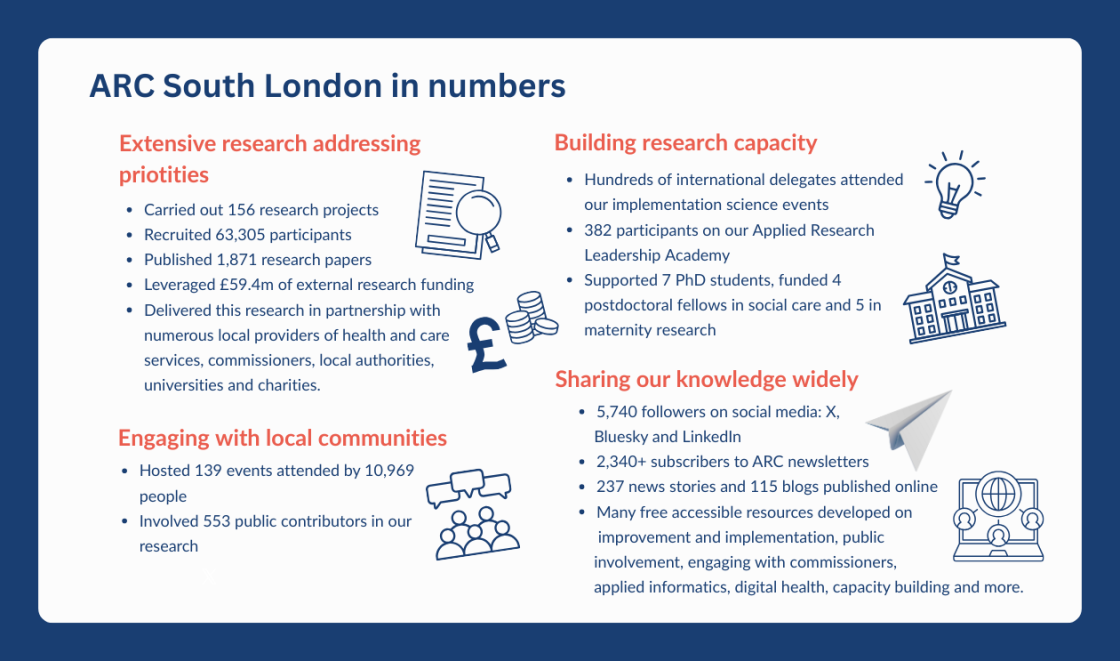
At a glance — jump to section:
- Addressing real-world problems: our research impact
- Supporting inclusive research: patient and public involvement
- Spotlight on peer research
- Building research skills capacity
- Spotlight on building capacity in social care research
- Spotlight on leadership in palliative care research
- Legacy for change
- Selection of ARC resources, news and commentary
Addressing real-world problems: our research impact
Our research has tackled real-world health and care challenges. In particular, we have aimed to:
✓
Improve care for vulnerable and older populations
✓
Support people living with multiple health conditions
✓
Address wider inequalities in health and care
This includes work designed to take pressure off hospitals through better community care, innovative solutions to prevent illness and harnessing digital innovation. Our research has translated evidence into lasting improvements in patient care.
Improving health outcomes for women and babies at risk of complications
Around 8% of babies in the UK are born prematurely — higher than elsewhere in Europe. There are also major disparities in maternal health outcomes for women belonging to ethnic minorities and those living in disadvantaged areas.
Our maternity researchers explored how health outcomes for women and babies at risk of complications could be improved through models of midwifery continuity of care. They found that women receiving continuity of care were:
19%
less likely to lose their baby before 24 weeks
24%
less likely to lose their baby overall
Their findings have informed key national and international guidance, including DHSC’s Safer Maternity Care, NICE intrapartum guidance, WHO antenatal and midwifery-care recommendations, and the NHS Long Term Plan. Research with Guy’s and St Thomas’ NHS Foundation Trust and the Lambeth Early Action Partnership (LEAP) showed the LEAP community-based continuity model significantly reduced preterm birth (24.3% vs 38.0%) and emergency caesarean deliveries (15.2% vs 22.5%).
Informing national policy on perinatal mental health
Up to one in four women experience mental illness during pregnancy and suicide is the leading cause of death among new mothers. We investigated ‘near misses’ in maternal mental health and informed the development of the Maternal Mental Health Service (MMHS) programme.
✓
Our research has directly impacted preconception care for women with serious mental illness, reaching 8,000 women nationally per month
✓
Our findings were cited in NHS England equity and equality guidance and referenced by the Royal College of Psychiatrists in a national report
Improving care for children and young people in south London
We co-designed and tested a new model of care for children with long-term conditions in Lambeth and Southwark, connecting community, primary and specialist services.
50%
of triaged patients had advice provided back to the referring GP, strengthening community care
49%
reduction in emergency department contacts for asthma patients seen by the service
30%
long-term cost savings for commissioners
Transforming the management of breathlessness in advanced illness
Our researchers gathered evidence on effective treatments for breathlessness, including non-drug interventions, leading to one of the UK’s first integrated breathlessness services for advanced illness.
✓
Allowed patients to be assessed and receive support at home, supporting community-based care
✓
Non-drug therapies (e.g. handheld fan) now widely used in UK palliative care
✓
Model now underpins national and international guidance
Supporting African and Caribbean adults who have type 2 diabetes
Working with the Health Innovation Network South London, we developed HEAL-D Online, a programme specially designed to support adults of African and Caribbean heritage living with type 2 diabetes.
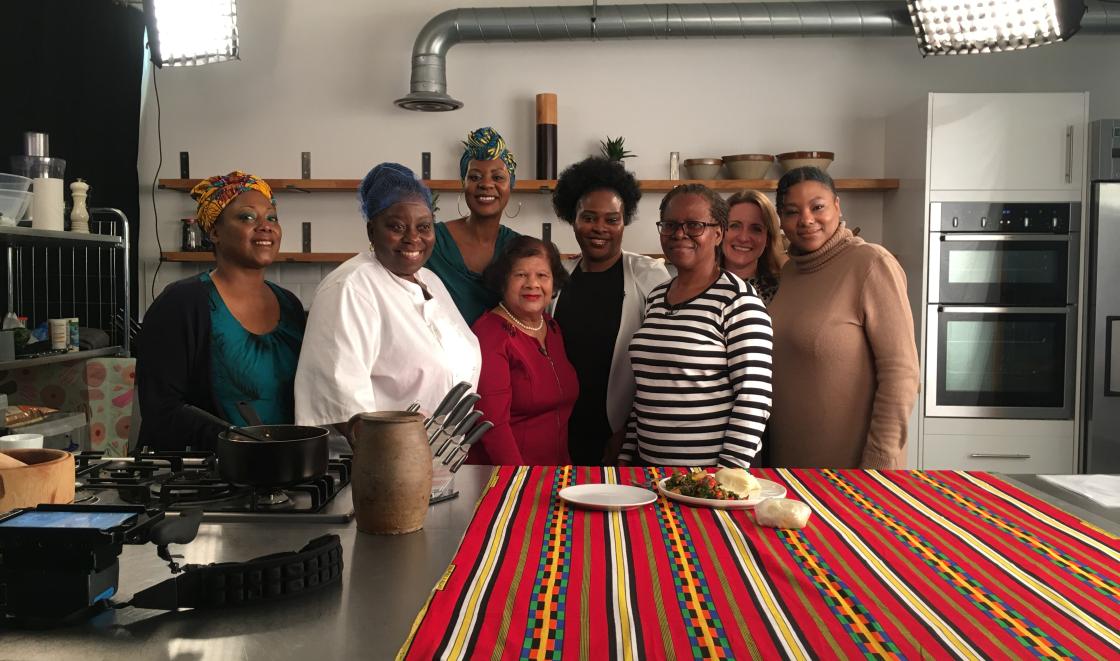 The team who co-developed the Healthy Eating & Active Lifestyles for Diabetes programme.
78%
of people who completed the programme reported weight loss
98%
strongly agreed or agreed that HEAL-D Online helped them manage their diabetes
49% → 23%
reduction in ‘diabetes-related distress’ after attending
HEAL-D Online is now available across south London and is being piloted in other parts of the country.
Improving care for people with alcohol addiction
We evaluated Alcohol Assertive Outreach Treatment (AAOT), a community-based approach for people with serious alcohol addiction who rarely access traditional services.
50%
reduction in hospital admissions
£10,470
saved per patient; return on investment of £3.34 for every £1 spent
✓
Quality of life improvements sustained after one year; reframes addiction care as community-based, not hospital-based
Supporting inclusive research: our patient and public involvement (PPI)
Involving patients, service users, carers and members of the public has been central to our research and its impacts. From the start, we brought lived experience into every stage of our work, from shaping research priorities and co-designing studies to interpreting findings and influencing implementation.
Spotlight on involvement in our maternity research
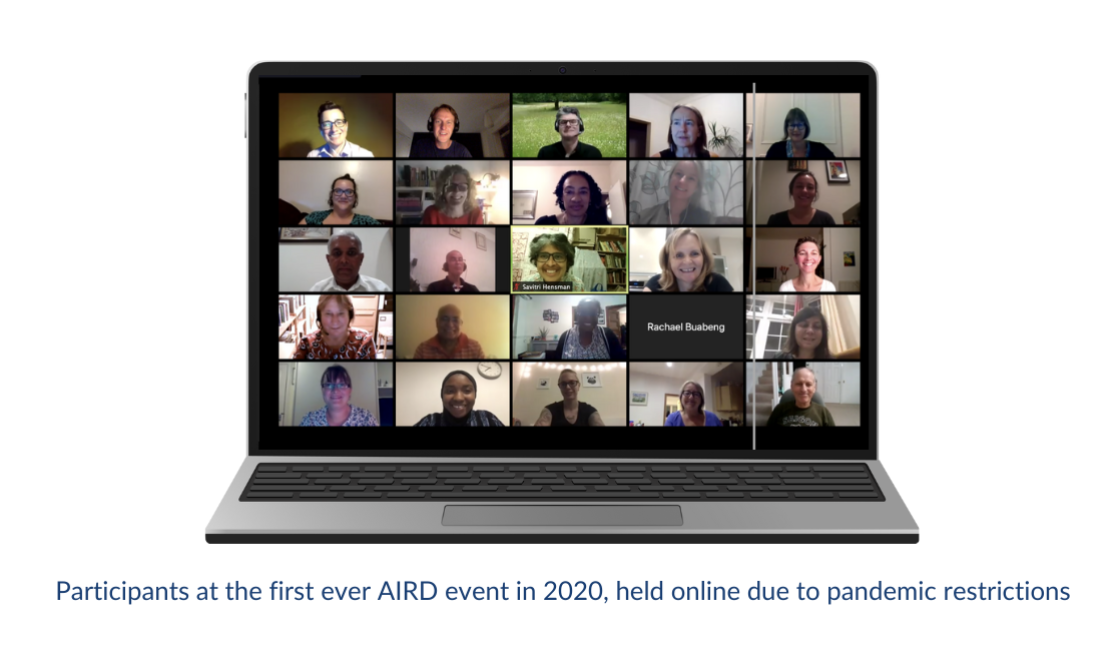 Public involvement members, peer and academic researchers, and ARC South London’s maternity theme leads share insights and call for change at multiple public events.
Our maternity and perinatal mental health theme consistently championed public involvement, establishing an inclusive culture, embedding their work in the community and working in partnership with women to improve services and lives. Researchers and PPIE members have co-written blogs, papers, reports and presentations sharing learning and experiences of healthcare and public involvement, and successfully showcased their work at popular events.
“PPIE is about empowering those very people who are at the heart of research in healthcare by giving them a voice.”

Involvement member, maternity and perinatal mental health theme
Involvement to support national improvement in mental health services
ARC South London led the NIHR-funded Mental Health Implementation Network (MHIN), which brought together service users, local communities, health and care providers, commissioners and other stakeholders to deliver evidence-based improvements in mental health services across England.
“The work I do now is about making sure the system can support people with severe mental illness to be able to make a meaningful contribution using their experience. Mental illness does not have to be a burden. It can be an experience that people can flourish from.”

PPI lead, Mental Health Implementation Network
Creative engagement with local communities
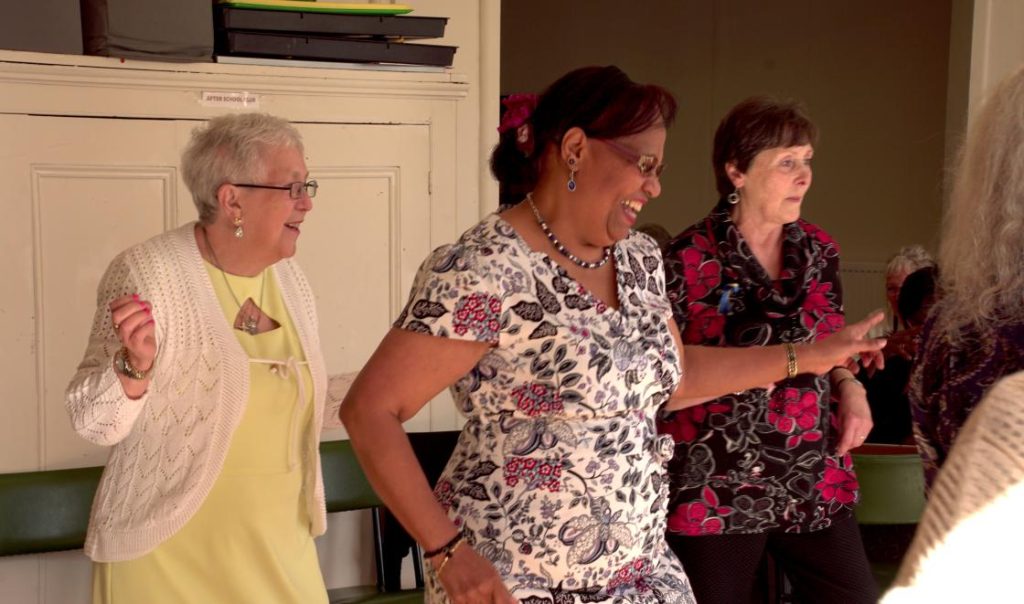
ARC South London supported informal, community-focused engagement events designed to welcome people from all backgrounds. Activities such as the Tea Dance event in Catford and annual Dementia Community Research Network involvement events brought research conversations into familiar social settings, combining interactive elements with relaxed opportunities to explore research topics.
Spotlight on peer research
Engaging with patients, service users, public and community contributors through peer-research methods — in which people with direct lived experience help to shape, conduct and lead research — is increasingly recognised as an important way of making research more impactful and inclusive.
Exploring whether Covid-19 exacerbated ethnic health inequalities
A study exploring whether Covid-19 exacerbated ethnic health inequalities in adults with serious mental and physical health conditions worked closely with peer researchers. It produced two papers and a powerful short film ‘A Life Less Safe’, based on interviews with 32 participants, screened to a full house at the Ritzy cinema, Brixton.
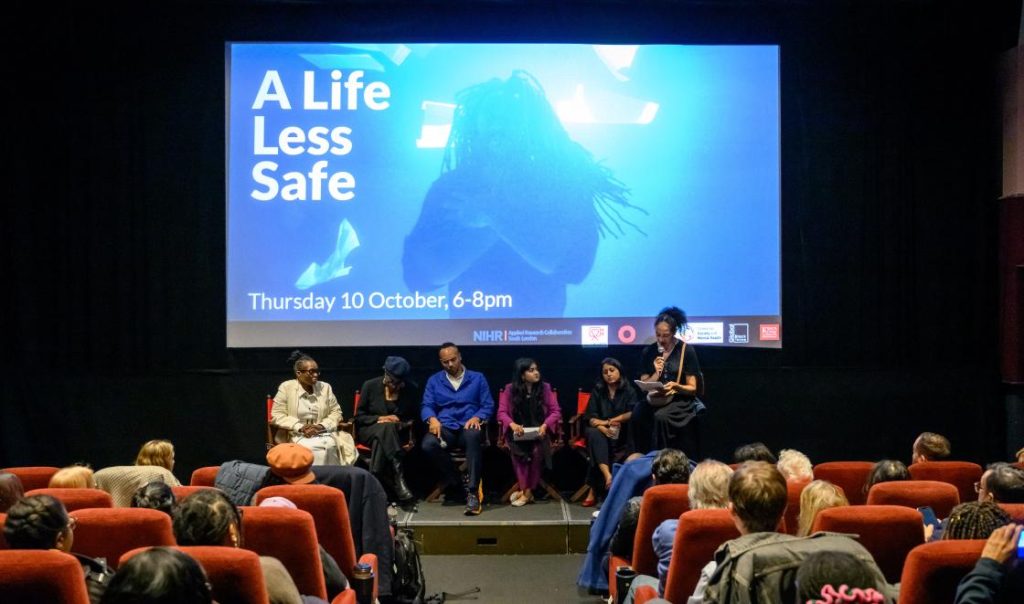 The film was screened to a full house at the Ritzy cinema, Brixton.
Using photography to understand maternal experiences
Our maternity researchers worked with peer researchers on the MORE Photovoice project, where participants were trained to use photography as a research methodology. Participants were encouraged to ‘speak’ through photographs, connect with others in their community and advocate for change.
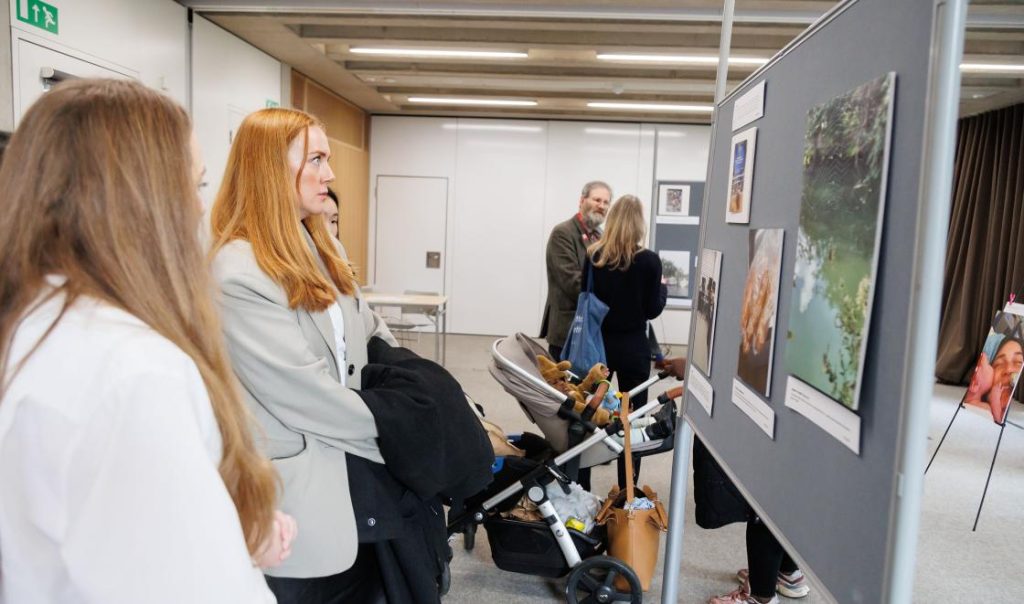 Attendees view the photo exhibition from the MORE project.
Increasing diversity and participation through ‘research cafes’
Dr Josephine Ocloo led a study with peer researchers to understand how ‘research cafes’ — informal spaces where diverse communities can talk about their experiences of health and care — can help increase diversity in research.
“Their involvement in this way is intended to shift power in the knowledge production process to be more equitable and to enhance the quality of research by providing insight, knowledge and lived expertise.”

Building research skills capacity
ARC South London offered a diverse range of training and capacity building for health and care practitioners, researchers, managers, policymakers, patients and service users.
Developing implementation and improvement science
Implementation science explores strategies to promote uptake of effective interventions into routine practice. Our researchers led the way in increasing the capacity for implementation science training and expertise:
✓
Held an annual Implementation Science Masterclass
✓
Launched an international Implementation Science Research Conference — the first dedicated conference of its kind in the UK
✓
Provided bespoke training in implementation science methods to researchers, non-researchers and health professionals

Developing leadership skills in applied health and care research
In 2022, we launched the NIHR ARC South London Applied Research Leadership Academy for health and social care professionals, researchers and public involvement members from across England to develop leadership skills and build research careers.
“What I liked most about the Academy was the chance to connect with others at a similar stage, share experiences honestly, and learn from different perspectives. The supportive environment made it easy to reflect on my own leadership style and think more clearly about where I want to take my research.”
Academy participant, 2024
97% of participants rated their overall experience as ‘Excellent’, ‘Very good’ or ‘Good’.
Spotlight on building capacity in social care research
With NIHR funding, we supported social care practitioners to develop skills and knowledge to use research to inform and improve services. Working with Kingston University and the NIHR Policy Research Unit in Health and Social Care Workforce, we provided training and support to 11 social care practitioners.
“The benefits extend beyond the researcher, as the community gains immensely from research like this, being developed to support and improve care for those who need it most.”
Filipa Maia, Education, Research and Engagement Officer, Nightingale Hammerson care homes
Spotlight on leadership in palliative care research
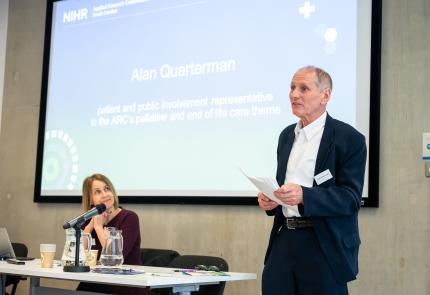
Working closely with colleagues at ARC East of England, we co-led a national NIHR forum for improving palliative and end of life care services in England, helping to generate, share and implement research evidence.
✓
Growing numbers of people living with multiple health conditions
✓
Addressing variation in care quality, access and outcomes
✓
New models of palliative and end of life care
✓
Use of robust outcome measures to enhance services, education and research
Our palliative national webinar series attracted more than 1,600 people across England to register.
Legacy for change
As ARC South London concludes, we celebrate the lasting impact of our collaborative research. The connections we have forged and the knowledge created together will continue to shape better health and care services for years to come.
“Whatever the future holds, I deeply value my years at ARC South London. Patient, service user, carer and public contributors, community partners and fellow staff have helped me reflect and grow. I do not intend to hover around passively, hoping somehow that public health and wellbeing will improve of their own accord, but rather to work with others in some way, in seeking a more just and compassionate world.”

ARC involvement coordinator
“I am positive that the expertise, impact and learning developed at ARC South London will continue to inform policy, influence services and be evident in our future work, wherever we are based.”

Director, ARC South London
Thank you to everyone involved for your commitment to research that supports a healthier and more equitable future for people in south London and beyond.
A new pan-London ARC
While ARC South London is concluding, a new opportunity for applied health, public health and social care research bringing together partners from across London has been announced by the NIHR. Members of ARC South London have helped to develop a collaborative proposal with colleagues at UCL, Imperial and universities across London.
If successful, the NIHR Pan-London ARC will start in July 2026. Find out more →
Selection of ARC resources, news and commentary
- →
Implementation Outcome Repository — resource to help researchers and practitioners measure the implementation outcomes of healthcare interventions - →
ImpResPAC — qualitative tool to appraise the conceptual and methodological quality of implementation research proposals - →
Implementation Science Research Development tool and guide - →
Practical introduction to carrying out public involvement in research — unique collection of resources from across the NIHR and other organisations - →
SC-ImpRes (Social Care Implementation Research) guide — guidance on designing and conducting implementation research across social care settings
Blogs from ARC South London
- →
‘Conjuring PPI’ — the unseen labour of patient and public involvement - →
A summer’s violence: knowing, and caring, when inequality bites - →
What to do about prevention Mr Streeting? Implementing NICE public health guidance - →
My experience of HEAL-D, a diabetes self-management programme for African and Caribbean communities
Original source: arc-sl.nihr.ac.uk — NIHR ARC South London legacy content archived May 2026.